An Ancient 'Yantraraj' (Astrolabe) Found on Raigad Fort
The astrolabe found in the excavation at Raigad: important evidence that the fort was built with the help of astronomical study, by the most scientific methods of its time.
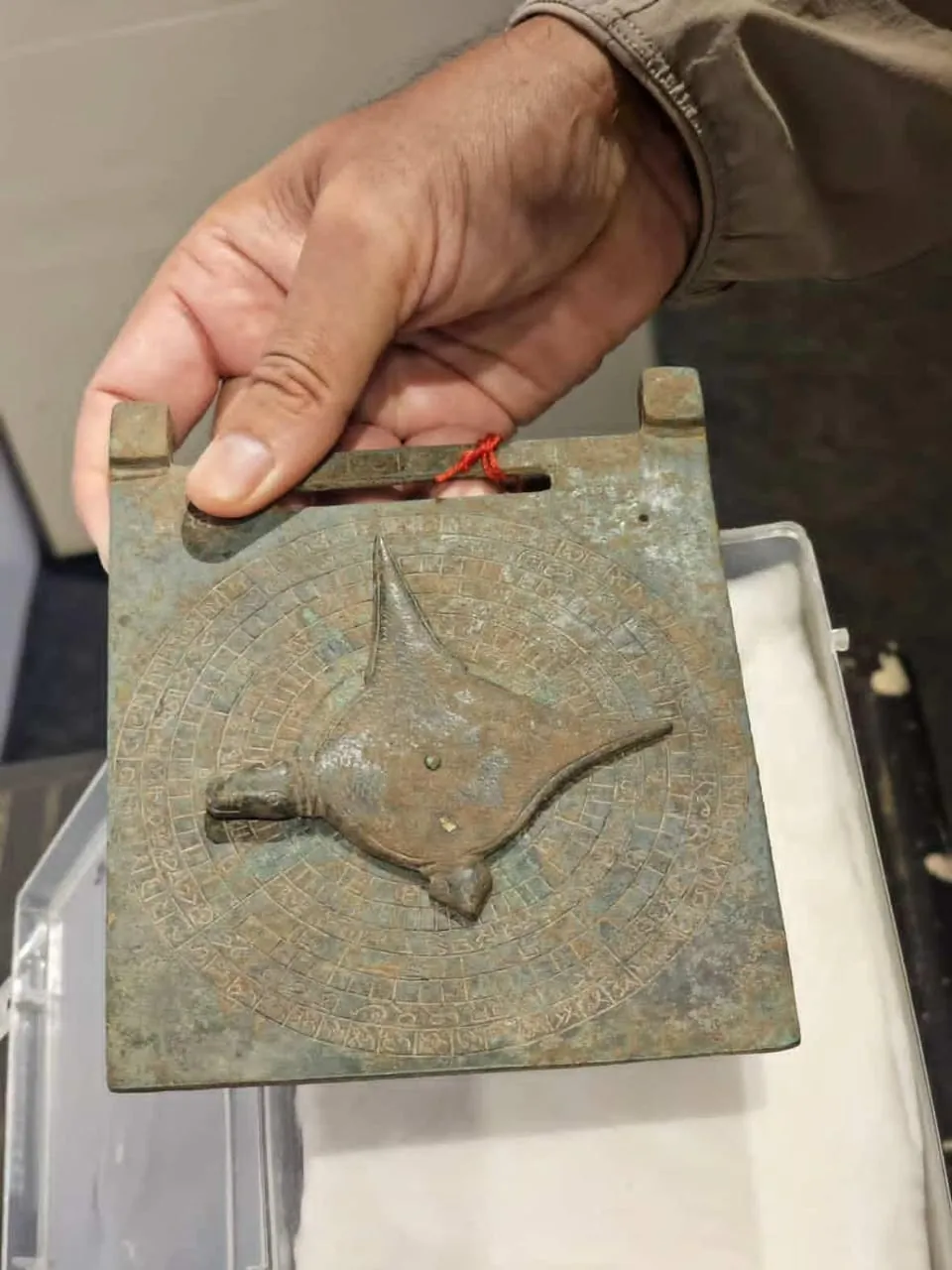
Important evidence has come to light that Durgaraj Raigad was built with the help of astronomical study, by the most advanced and scientific methods of its time. In the excavation being carried out jointly on Raigad by the Archaeological Survey of India and the Raigad Development Authority, an ancient astronomical instrument, the 'yantraraj' or saumya-yantra (astrolabe), has been found on the fort.
Since ancient times the astrolabe has been an important instrument for studying the planets and stars, finding directions and measuring time. It is also known as the 'yantraraj', the king of instruments. It was used to make it easier to study things such as latitude, longitude, the Tropic of Cancer and the equator. It is possible that this instrument was used for astronomical study while Raigad was being built.
Through the joint efforts of the Archaeological Survey of India and the Raigad Development Authority, excavation work has been going on at Raigad for some years. Over the last three to four years, excavation has been completed at about 10 to 12 places in different parts of the fort where remains of mansions from Shivaji Maharaj's time stand: from behind the ropeway upper station to Kushavart lake, and from the marketplace to the Jagdishwar temple. Mainly, when excavation was carried out on the site of a historic mansion above Kushavart lake, between the rain gauge and the Wadeshwar temple, this ancient yantraraj, the saumya-yantra (astrolabe), was found at that very spot.
Professor Roheit Naik answers them in a private consultation.
For guidance and reflection only; not medical, legal or financial advice.